
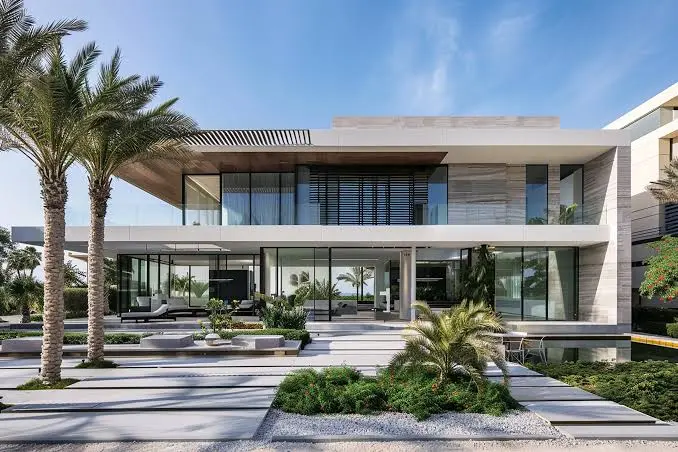
Explore Dubai villa and townhouse market trends for 2026. Compare family communities, rental yields, off-plan vs. ready options, and capital growth drivers.
Villa and Townhouse Demand in Dubai: Why Family-Oriented Communities Are Attracting Property Buyers and Investors
Dubai’s residential property landscape has undergone a structural shift over the past several years. While high-rise apartments in central districts have historically dominated headline transaction volumes, villas and townhouses for sale in Dubai have emerged as one of the most resilient, supply-constrained segments of the emirate’s real estate market.
According to official Dubai Land Department (DLD) registration data and Q1 2026 residential market analyses, residential sales prices across Dubai averaged AED 1,683 per square foot, reflecting a 9.6% year-on-year increase. More notably, market performance in 2026 highlights a clear divergence between property types: while heavy handover volumes of roughly 120,000 scheduled residential units—overwhelmingly concentrated in apartment-dense districts—have introduced localized pricing competition in the flat segment, low-rise family communities remain insulated by finite land availability.
For end-users relocating with children and investors seeking durable, long-term Dubai property investment opportunities, understanding what drives demand in the Dubai villa market and Dubai townhouse market is essential before committing capital.
Why Family-Oriented Communities Are Attracting Buyers in Dubai
The sustained appetite for ground-oriented housing in Dubai is rooted in demographic transformation rather than short-term speculation. Dubai’s population expansion, coupled with long-term residency initiatives such as the 10-year UAE Golden Visa—available to property buyers investing AED 2 million or more—has encouraged expatriate families and entrepreneurs to establish permanent roots rather than viewing the city as a temporary posting.
Several lifestyle and practical factors explain why family-friendly communities in Dubai continue to draw both owner-occupiers and long-term tenants:
Space and Layout Efficiency: Compared to standard urban apartments, townhouses and detached villas provide multi-level floor plans, dedicated home offices, maid’s quarters, covered parking, and private outdoor gardens.
Privacy and Low-Density Living: Shared walls are minimized in townhouses and eliminated entirely in standalone villas, offering quieter residential streets and lower population density.
Integrated Community Infrastructure: Modern master-planned developments are designed as self-contained ecosystems featuring gated security, landscaped parks, cycling tracks, swimming pools, community retail centers, and fitness clubs.
Proximity to Schools and Healthcare: Families prioritize daily convenience. Master communities located near accredited British, American, and IB curriculum schools, nurseries, and outpatient clinics consistently experience stronger occupancy and lower tenant turnover.
Dubai’s Growing Suburban Residential Corridors
As central Dubai districts near full build-out and land prices in coastal zones remain elevated, residential expansion has moved decisively inland along major highway arteries—specifically Sheikh Mohammed Bin Zayed Road (E311), Emirates Road (E611), Al Qudra Road (D63), and Dubai–Al Ain Road (E66).
Properties in Dubailand and surrounding growth corridors represent the backbone of Dubai’s suburban expansion. Spanning over 3 million square feet of master-planned districts, Dubailand encompasses multiple distinct gated communities tailored to different budget tiers. Similarly, Dubai Silicon Oasis properties have gained traction among technology professionals, academics, and families seeking proximity to employment hubs, universities, and retail centers such as Silicon Central, all while sitting along the future Dubai Metro Blue Line corridor.
This outward expansion has allowed buyers to access modern, energy-efficient homes with superior community amenities at substantially lower price points per square foot than older coastal neighborhoods.
Established Communities vs. Emerging Residential Developments
When evaluating Dubai real estate investment opportunities, buyers generally choose between established villa and townhouse communities and emerging master-planned developments, with each offering distinct advantages and considerations. Established communities benefit from mature infrastructure, landscaped parks, completed roads, operational schools and nearby retail facilities, making them attractive to families seeking convenience and investors looking for immediate rental income. These properties may require a higher initial investment, usually through cash or mortgage financing, and some older homes may need renovation or upgrades. In contrast, emerging master-planned developments often offer more accessible entry prices, flexible construction-linked payment plans, contemporary architectural designs, modern layouts and smart-home features. However, buyers should consider that amenities, roads, schools and retail facilities may be delivered in phases, and rental income will generally only begin after construction completion and handover. From an investment perspective, established communities can offer immediate rental opportunities and the benefit of proven demand, while emerging communities may offer potential capital appreciation as infrastructure develops and the surrounding area matures. Ultimately, the right choice depends on the investor's budget, investment timeline, rental income requirements, risk tolerance and long-term property goals.
In Q1 2026 residential market studies, industry data noted that well-renovated villas in established communities command a 12% to 18% resale premium over unrenovated comparable units, underscoring how modern end-users value updated interiors in prime, mature postcodes. Conversely, emerging developments appeal to buyers prioritizing flexible payment schedules and brand-new specifications.
Best Areas and Communities to Consider in Dubai
Selecting among the best areas to buy villas in Dubai and the best townhouse communities in Dubai requires comparing entry prices, build quality, plot sizes, and connectivity. Below is an objective overview of prominent family communities across different price brackets, referencing verified DLD transaction summaries from late 2026.
1. Arabian Ranches (1, 2, and 3)
Arabian Ranches remains one of Dubai’s benchmark suburban family addresses.
Arabian Ranches 1 & 2: Mature, leafy neighborhoods offering spacious standalone villas and townhouses alongside established schools, golf facilities, and retail souks. Ready villas in Arabian Ranches 1 recorded a median price of approximately AED 4.9 million (AED 1,428 per sq. ft.) in August–October 2026 DLD registrations.
Arabian Ranches 3: A newer gated extension featuring contemporary 3- and 4-bedroom townhouses (such as Sun, Joy, and Raya) with splash pads, lazy rivers, and direct access to Academic Road and Emirates Road. Ready sales in Q3–Q4 2026 registered a median price near AED 3.3 million.
2. Tilal Al Ghaf
Positioned along Hessa Street and Sheikh Zayed Bin Hamdan Al Nahyan Street, Tilal Al Ghaf is a resort-style master community anchored by a 70,000-square-meter swimmable lagoon (Lagoon Al Ghaf) and white sandy beaches.
Offering townhouses (such as Elan and Aura) alongside luxury standalone villas (Harmony and Alaya), the community has attracted strong end-user demand.
Ready registrations between August and October 2026 showed a median sale price of approximately AED 4.05 million (AED 2,223 per sq. ft.), while new annual leases averaged roughly AED 345,900.
3. Villanova (Dubailand)
Located in Dubailand near the intersection of Emirates Road (E611) and Al Ain Road (E66), Villanova features Mediterranean-inspired clusters (Amaranta, La Quinta, and La Rosa) surrounded by linear parks and pedestrian walkways.
Villanova appeals to mid-market family buyers seeking spacious 3- and 4-bedroom townhouses and cluster homes without luxury price tags.
DLD data for late 2026 recorded a median ready price of roughly AED 3.075 million (AED 1,469 per sq. ft.), making it one of the most actively traded mid-tier family communities.
4. The Valley
Situated along the Dubai–Al Ain Road (E66), The Valley is a master-planned town designed for first-time villa and townhouse buyers and young families.
Key amenities include Golden Beach, a 50,000-square-foot Town Centre, a Sports Village, and Kids’ Dale.
Ready townhouse transactions (such as Eden) registered a median price of approximately AED 2.75 million (AED 1,380 per sq. ft.) in August–October 2026, while newer off-plan phases launched in 2026 priced 3-bedroom units between AED 2.4 million and AED 4.4 million depending on size and cluster.
5. Dubai Silicon Oasis (DSO)
While Dubai Silicon Oasis properties are predominantly mid-rise apartments (which generated roughly 8.0% to 8.5% gross rental yields in 2026), DSO also houses established gated villa sub-communities such as Cedre Villas and Semmer Villas.
These larger standalone family homes benefit from immediate proximity to technology business parks, international schools, and major highways.
Because villa stock inside DSO is limited, transaction counts are smaller than in Dubailand—with standalone villa sales averaging roughly AED 5.0 million to AED 5.58 million in 2026 DLD records.
6. Other Notable Family Communities
Dubai Hills Estate: Centrally positioned along Al Khail Road with an 18-hole championship golf course, regional shopping mall, and major healthcare facilities; ready villas and townhouses recorded a median price of AED 5.45 million in late 2026.
Mudon & Town Square: Popular Dubailand corridors offering strong liquidity. Town Square ready townhouses traded at a median of AED 2.99 million (AED 1,334 per sq. ft.), while Mudon averaged AED 4.1 million.
Capital Appreciation and Rental Income Opportunities
When investing in Dubai real estate, investors should distinguish between cash-flow assets and capital-growth assets, as apartments and ground-level homes perform differently across both metrics.
Rental Yield in Dubai: Villas and Townhouses vs. Apartments
Rental yield measures a property’s annual rental income as a percentage of its purchase price. According to November 2026 market benchmarks compiled from official DLD and Ejari records, citywide average gross rental yields stood at:
Apartments: 6.96%
Townhouses: 5.20%
Villas: 4.67%
Similarly, Q1 2026 residential market reports placed combined villa and townhouse gross yields at an average of 5.0%, compared to 7.2% for apartments. Mid-market townhouse communities such as Villanova (5.48%–5.59%), Mudon (5.50%–5.58%), and Town Square (5.27%) generally deliver higher percentage yields than ultra-prime villa enclaves like Jumeirah Islands (3.22%) or Arabian Ranches 1 (3.89%–4.52%), where higher capital values compress initial yield percentages.
However, percentage yield only tells part of the story. Villa and townhouse investors benefit from:
Longer Tenant Tenure: Families rarely relocate every twelve months due to school enrollments and moving costs, resulting in lower vacancy rates and reduced leasing agency turnover fees.
Lower Per-Square-Foot Service Charges: Because townhouses and villas do not share high-rise elevators, central chiller plants, or extensive lobby infrastructure, annual community service charges per square foot are typically lower than in luxury apartment towers.
Drivers of Capital Appreciation in Dubai Real Estate
Long-term capital appreciation in Dubai real estate for villas and townhouses is driven by structural supply constraints. Land plots required for master-planned villa communities are finite, and new villa launches represent a small fraction of overall construction—accounting for just 1.1% of new project launches in Q1 2026 (with townhouses at 5.2%), according to DLD project registration data.
Properties located near expanding road networks, upcoming metro links (such as the Dubai Metro Blue Line), established schools, and reputable master communities historically demonstrate stronger price resilience during market consolidation phases.
Off-Plan vs. Ready Villa and Townhouse Investments
Choosing between off-plan villas in Dubai (or off-plan townhouses in Dubai) and ready villas for sale in Dubai depends on your investment horizon, financing strategy, and liquidity needs.
Buying Off-Plan Properties
Off-plan properties are purchased directly prior to construction completion.
Advantages: Lower initial entry prices compared to completed neighboring phases, staged payment plans (such as 60/40 or 70/30 linked to construction milestones), brand-new warranties, and potential capital appreciation between launch and handover. Buyer funds are protected under Dubai’s Real Estate Regulatory Agency (RERA) escrow account regulations.
Disadvantages: No rental income during the 2-to-4-year construction period, potential handover delays, and exposure to market price fluctuations before completion.
Buying Ready (Secondary Market) Properties
Ready properties are completed homes purchased from an existing owner or completed inventory.
Advantages: Immediate occupancy or instant rental cash flow, ability to physically inspect build quality, plot orientation, and sun exposure, and eligibility for standard UAE bank mortgages (typically up to 80% loan-to-value for expatriate first-time buyers on properties under AED 5 million).
Disadvantages: Higher upfront capital requirement (deposit plus closing costs), potential need for cosmetic updates in older communities, and less flexible payment terms.
Key Factors to Consider Before Investing
Experienced investors conduct thorough financial and physical due diligence before signing a Memorandum of Understanding (Form F) or Sales and Purchase Agreement (SPA). Key factors include:
Purchase Price per Square Foot (BUA vs. Plot Size): Always verify whether a quoted price per square foot is calculated using the Built-Up Area (BUA—the internal living space) or the total land plot area, as comparing the two can distort valuation benchmarks.
Transaction and Closing Costs: Budget roughly 7% to 8% above the purchase price for cash purchases (and 8% to 9% for mortgage purchases). This covers the mandatory 4% Dubai Land Department (DLD) transfer fee, DLD admin fees, real estate agency commission (typically 2% plus VAT), trustee office registration fees, and mortgage registration fees (0.25% of the loan amount) if financing.
Service Charges and Ongoing Maintenance: Check the RERA Service Charge Index for the specific community. While community fees cover security, landscaping, and shared pools, villa owners are personally responsible for private garden upkeep, roof waterproofing, exterior painting, and air-conditioning servicing.
Delivery Track Record: Review past project delivery timelines, build quality, and post-handover community management standards before committing to an off-plan unit.
Upcoming Supply Pipeline: Analyze how many similar 3- or 4-bedroom units are scheduled to hand over in the immediate 2-to-3-kilometer radius over the next 24 months, as clustered handovers can temporarily moderate achievable rents.
Exit Strategy: Evaluate resale liquidity. Standard 3- and 4-bedroom layouts in family-centric clusters near parks or pools typically attract the widest pool of future buyers.
Future Outlook for Dubai’s Villa and Townhouse Market
After several years of rapid post-pandemic price expansion through 2025, Dubai’s residential property market entered a healthier, more balanced phase of consolidation in 2026. Official transaction indices and market data during H2 2026 indicate that while headline transaction volumes moderated from 2025 peaks and rental growth stabilized, pricing across established villa and townhouse communities remained broadly resilient.
Key Opportunities:
Continued population inflow and corporate relocations sustain organic end-user housing demand.
Major infrastructure investments—including the Al Maktoum International Airport expansion and the Dubai Metro Blue Line—enhance long-term connectivity across eastern and southern suburban corridors.
A high proportion of cash buyers across Dubai reduces systemic mortgage-default risk.
Potential Risks to Monitor:
Elevated apartment handovers scheduled across 2026 and 2027 could spill over into entry-level townhouse rental competition in outer suburbs.
Global interest rate movements and regional geopolitical developments can temporarily influence buyer sentiment and mortgage affordability.
For disciplined buyers taking a medium-to-long-term horizon (3 to 7+ years), well-located family homes in established or infrastructure-backed master communities remain one of the most defensive asset classes in the region.
Conclusion: Finding the Right Villa or Townhouse in Dubai
Dubai’s evolution into a premier global hub for families and long-term residents has cemented the appeal of spacious, amenity-rich suburban living. Whether you are drawn to the mature greenery of Arabian Ranches, the lagoon lifestyle of Tilal Al Ghaf, or the accessible growth corridors of Dubailand, Villanova, and The Valley, aligning your purchase with verified market data and clear financial goals is the foundation of a successful acquisition.
Ready to explore your options in Dubai’s villa and townhouse market?
Browse Curated Listings: Explore our latest portfolio of ready and off-plan villas and townhouses across Dubai’s top family communities.
Compare Communities Side-by-Side: Request a tailored comparative market analysis comparing price per square foot, service charges, and verified Ejari rental yields.
Speak with a Property Consultant: Connect with our Baypoint advisory team today for personalized property recommendations, off-plan payment plan breakdowns, and end-to-end mortgage and transaction guidance.