
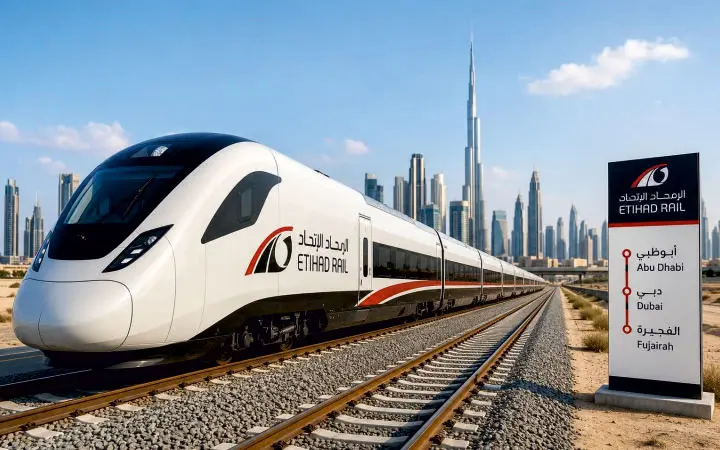
Discover how the new Etihad Rail network influences Dubai real estate prices, rental yields, and hot investment areas across JGE, Meydan, and Dubai South.
The opening of the Al Yalayis Etihad Rail station at Jumeirah Golf Estates on September 30, 2026, marked a watershed moment for the UAE’s real estate landscape. By connecting Dubai to Abu Dhabi’s Mohammed Bin Zayed City in roughly 57 minutes, national passenger rail is shifting buyer behavior from localized urban preferences to regional transit connectivity. While infrastructure announcements frequently spark speculative interest, real capital growth is congregating around functional transport nodes. This article analyzes the real estate impact of Dubai's four Etihad Rail hubs—Al Yalayis, Meydan, Al Maktoum International Airport, and Al Jaddaf—examining price movements, rental yield dynamics, last-mile dependencies, and strategic considerations for investors.
The National Rail Revolution Arrives in Dubai
For decades, Dubai’s real estate value map was dictated primarily by proximity to key arterial highways—Sheikh Zayed Road (E11), Sheikh Mohammed Bin Zayed Road (E311), and Al Khail Road (E44)—alongside the footprint of the Dubai Metro. The launch of Etihad Rail’s passenger network into Dubai in late 2026 adds an entirely new dimension: inter-emirate rail integration.
This infrastructure upgrade transforms how residents commute between Dubai, Abu Dhabi, and the Northern Emirates. For real estate investors, property owners, and developers, improved transit connectivity alters tenant demographics, expands rental catchments, and establishes clear valuation premiums for transit-oriented developments.
However, the real estate impact of rail infrastructure is neither uniform nor guaranteed across all locations. Capital appreciation depends heavily on whether a station is currently operational, how easily residents can navigate the "last mile" from train to front door, and the volume of competing housing supply entering the market.
Mapping Dubai’s Four Etihad Rail Hubs
To evaluate property opportunities accurately, investors must distinguish between operational national passenger lines, future network interchanges, and planned high-speed rail links. Dubai’s master transport layout incorporates four primary rail-linked nodes:
1. Al Yalayis Station (Jumeirah Golf Estates) — The Operational Baseline
As the first active passenger rail station in Dubai, Al Yalayis at Jumeirah Golf Estates serves as the immediate test case for rail-driven property appreciation. Situated near Sheikh Mohammed Bin Zayed Road, the station features a direct pedestrian connection to the existing Jumeirah Golf Estates Metro Station, establishing a multi-modal transport hub.
Real Estate Impact: Jumeirah Golf Estates was already an established, premium golf-community master plan. The addition of Etihad Rail enhances its appeal for dual-emirate executive households who work in Abu Dhabi but prefer living in Dubai.
Catchment Expansion: Beyond the immediate perimeter of Jumeirah Golf Estates, neighboring residential communities—including Al Furjan, Dubai Investment Park (DIP), Green Community, and Dubai Production City (IMPZ)—are benefiting from enhanced regional accessibility.
2. The Meydan Interchange — Future Urban Centrality
Master plans for Dubai’s 2032 rail network outline a major national network interchange around Meydan. Furthermore, the Roads and Transport Authority (RTA) has confirmed that the planned Dubai Metro Gold Line will link with Etihad Rail at Meydan and Jumeirah Golf Estates.
Real Estate Impact: Meydan sits in close proximity to Downtown Dubai and Business Bay. Integrating local metro transit with national rail transforms Meydan from a luxury suburban enclave into a central interchange.
Investor Strategy: Because the Meydan rail interchange is a multi-year project, investors should treat it as a long-term capital preservation and appreciation play rather than expecting immediate rental spikes.
3. Al Maktoum International Airport (Dubai South) — High-Speed Logistics & Aviation Corridor
One of Dubai’s two designated high-speed rail stations is planned to serve Al Maktoum International Airport in Dubai South.
Real Estate Impact: Combining high-speed rail, the world’s largest planned airport expansion, and extensive logistics infrastructure creates a durable foundation for residential demand.
Supply Dynamics: Dubai South features a massive development pipeline. While rail connectivity strengthens long-term occupier demand, high volumes of incoming off-plan deliveries will keep rental growth steady rather than speculative.
4. Al Jaddaf — High-Speed Urban Business Integration
The second planned high-speed rail station is located in Al Jaddaf. Positioned along Dubai Creek with established Dubai Metro Green Line access, Al Jaddaf represents a central infill redevelopment zone.
Real Estate Impact: High-speed rail connections give Al Jaddaf a distinct advantage for corporate commuters and business travelers needing rapid access between central Dubai and Abu Dhabi.
Property Types: High-density luxury apartments and waterfront residential units stand to gain the most from this added layer of connectivity.
Price Appreciation and Rental Yield Dynamics Does proximity to an Etihad Rail station automatically increase property values? Market evidence indicates yes—but with important nuances regarding distance and asset class.
Historical data from metro expansions globally, alongside early transaction metrics near confirmed Etihad Rail stations, highlight clear performance patterns:
Rental Yield Expansion
Rail infrastructure lifts tenant demand faster than it drives up home purchase prices. Tenants value immediate lifestyle conveniences—such as cutting a 90-minute highway drive down to a 57-minute predictable train ride—and are willing to pay a rental premium for it.
As a result, buy-to-let investors targeting 1-bedroom and 2-bedroom apartments near operational stations like Al Yalayis can expect higher occupancy rates and gross rental yields ranging between 6.5% and 8.2%, outperforming non-connected suburban developments.
Micro-Market Analysis: Communities to Watch
The ripple effect of Etihad Rail extends beyond the immediate station boundaries. Key sub-markets positioned along these transit corridors include:
Al Furjan & Dubai Investment Park (DIP): Located adjacent to Jumeirah Golf Estates, these communities offer accessible price points per square foot. Combined with Route 2020 Metro access and proximity to Al Yalayis, they represent high-yield rental opportunities for mid-market investors.
Meydan / Mohammed Bin Rashid (MBR) City: As plans progress for the Meydan interchange and Gold Line Metro connection, luxury villa and apartment clusters here gain long-term structural demand, strengthening their position against central city alternatives.
Dubai South (Madinat Al Mataar): Combining the Al Maktoum Airport expansion with high-speed rail access makes Dubai South one of the most active off-plan investment corridors in the emirate.
Critical Investment Considerations: "Last-Mile" and Supply Realities
While transport connectivity is a powerful catalyst, sophisticated property buyers must evaluate three critical factors before investing:
1. The "Last-Mile" Test
A property located 2 kilometers from a station on a map may prove inconvenient in reality if pedestrian pathways, feeder buses, or road connectors are lacking. True transit-oriented value relies on door-to-door convenience. Buyers should evaluate:
Is there a direct, sheltered, or climate-controlled walkway to the station?
Are park-and-ride facilities or feeder bus stops operational?
How severe is road congestion surrounding the station during peak hours?
2. Infrastructure Stacking
The strongest capital growth occurs where multiple transport networks converge. A location served only by rail carries moderate upside; a location that stacks national rail, local metro, major highways, and airport proximity (such as the southern corridor around Jumeirah Golf Estates and Dubai South) possesses far more durable demand.
3. The "Without Rail" Stress Test
Always test the asset on its underlying merits. If the rail line or station experience timeline adjustments, does the property still function as a desirable place to live or rent? A sound investment must showcase strong build quality, realistic service charges, good developer reputation, and solid local amenities independent of transport promises.
Market Outlook: What Investors Should Do Next
As Etihad Rail continues its phased expansion, the Dubai real estate market will see a growing performance gap between connected and isolated communities.
For Homeowners & End-Users: Consider communities along active or confirmed rail corridors if your household requires regular travel across emirates or values long-term resale liquidity.
For Buy-to-Let Investors: Prioritize smaller, walkable apartment units near operational hubs like Al Yalayis to capture early tenant demand and maximize rental yields.
For Off-Plan Buyers: Differentiate between infrastructure opening today versus future proposals. Ensure off-plan purchase prices near future stations (such as Meydan or Al Jaddaf) reflect present value rather than unearned future premiums.
Conclusion
The integration of Etihad Rail into Dubai’s urban fabric represents far more than a transport upgrade—it is a fundamental restructuring of regional real estate dynamics. By connecting key residential, commercial, and aviation hubs, national rail enhances connectivity, broadens tenant pools, and provides long-term support for property values. However, navigating this evolving market requires careful analysis of station timelines, last-mile infrastructure, and local supply pipeline realities.
For any property advice or inquiry get in touch with Bay Point Real Estate.
FAQ Section
When did the Etihad Rail station open in Dubai?
The first Etihad Rail passenger station in Dubai, Al Yalayis Station at Jumeirah Golf Estates, officially opened on September 30, 2026.
How long does the Etihad Rail train take from Dubai to Abu Dhabi?
The passenger rail trip between Al Yalayis Station in Dubai and Mohammed Bin Zayed City in Abu Dhabi takes approximately 57 minutes.
Will property prices go up near Etihad Rail stations in Dubai?
Properties within close walking distance (up to 800 meters) of confirmed and active rail stations typically experience higher demand and appreciation. However, actual price growth also depends on total housing supply, community quality, and last-mile connectivity.
Which Dubai areas benefit most from Etihad Rail?
Immediate beneficiaries include Jumeirah Golf Estates, Al Furjan, Dubai Investment Park (DIP), Dubai South, Meydan, and Al Jaddaf.
How many Etihad Rail-linked stations will Dubai have in total?
Dubai's transport plan includes four rail-linked hubs: two associated with the national passenger network (Al Yalayis and Meydan) and two high-speed rail stations (Al Maktoum International Airport and Al Jaddaf).
Is buying rental property near an Etihad Rail station a good yield strategy?
Yes. Transport connectivity attracts a steady pool of inter-emirate commuters and working professionals, which supports high occupancy rates and strong rental yields (often between 6.5% and 8.2%).