
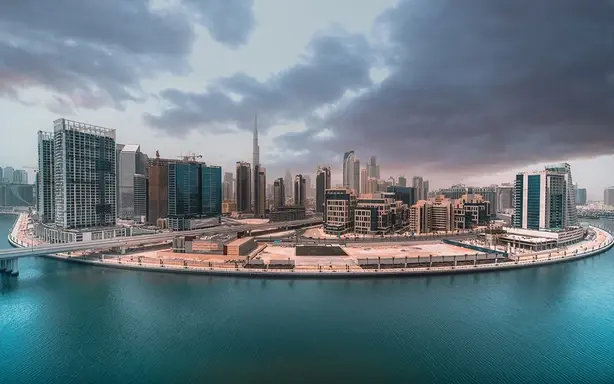
Discover Q4 2026 insights into the Dubai commercial property market. Explore office space trends, retail growth, industrial real estate yields, and investment tips.
As we enter the final stretch of the year into the fourth quarter of 2026, Dubai’s commercial real estate market continues to shatter expectations, driven by an unprecedented influx of institutional capital, multinational corporate expansions, and robust economic policies. Following a record-breaking first half of the year—which saw 3,437 transactions worth AED 19.6 billion across office, retail, and warehouse assets—Q4 2026 is maintaining this extraordinary momentum.
At Bay Point Real Estate, we closely monitor these shifts to provide our clients with actionable, data-driven intelligence. The narrative of 2026 is one of structural transformation. What we are witnessing is not merely a cyclical boom, but a fundamental repricing of Dubai’s commercial assets. With the city solidifying its status as a premier global business hub, the demand for premium office spaces, high-footfall retail units, and modern logistics facilities has dramatically outpaced supply.
Whether you are a seasoned institutional investor, a business owner looking to acquire your own headquarters, or a private buyer exploring commercial diversification, this comprehensive Q4 2026 report will equip you with the insights needed to navigate Dubai’s dynamic commercial property landscape.
The Macro Environment: Why Dubai Commercial Real Estate is Booming
Before diving into the specific asset classes, it is essential to understand the macroeconomic tailwinds driving the market as we navigate through Q4 2026. Dubai’s economic resilience is deeply rooted in the ambitious Dubai Economic Agenda (D33), which aims to double the size of the emirate's economy by 2033.
This agenda has aggressively targeted sectors like fintech, artificial intelligence, healthcare, and advanced manufacturing. As a result, new companies are registering at a record pace. Furthermore, progressive policy reforms have made the city more attractive than ever to foreign capital. The UAE’s Golden Visa program, which grants long-term residency to property investors, fully applies to commercial real estate. Investors purchasing commercial assets worth AED 2 million or more can secure this residency, creating a dual incentive of strong financial yields and premium lifestyle benefits.
The combination of population growth, a business-friendly regulatory environment, and world-class infrastructure has resulted in commercial real estate currently outperforming the residential sector in several key metrics, including year-over-year capital appreciation and tenant retention.
Office Segment Analysis: The Grade A Squeeze
The office market is unequivocally the standout performer of 2026. Following an astonishing mid-year period where office sales values climbed by a remarkable 190% year-on-year, Q4 continues to see intense competition for high-quality workspaces.
The Shortage of Premium Workspaces
The most defining characteristic of the 2026 office market is the severe structural undersupply of Grade A office space—the newest, highest-quality buildings featuring modern amenities, green certifications, and premium locations. Very little new prime supply was delivered between 2018 and 2022, and the explosive demand from financial services, tech firms, and family offices has completely absorbed the available stock.
Currently, vacancy rates in prime Grade A towers across the Dubai International Financial Centre (DIFC), Downtown Dubai, and Business Bay are running below 5%. This scarcity has pushed average prices for prime office space higher, cementing strong capital appreciation across the board.
Leasing Dynamics and SME Demand
On the leasing front, the market remains highly active but constrained by supply. Overall leasing transactions have maintained steady quarterly growth, supported primarily by small and medium-sized enterprises (SMEs) and startups.
Transactions for office units under 1,500 square feet account for a massive share of leasing activity, highlighting a sustained demand for flexible, cost-efficient workspaces from single-owner operators and new market entrants. Larger corporate occupiers, meanwhile, are facing limited options, often forcing them to renew existing leases at higher premiums rather than undertaking the costly and difficult process of relocating.
Transactions for office units under 1,500 square feet account for a massive share of leasing activity, highlighting a sustained demand for flexible, cost-efficient workspaces from single-owner operators and new market entrants. Larger corporate occupiers, meanwhile, are facing limited options, often forcing them to renew existing leases at higher premiums rather than undertaking the costly and difficult process of relocating.
Top Performing Office Locations in Q4 2026
When evaluating where capital is flowing, a few key districts dominate the landscape:
DIFC (Dubai International Financial Centre): DIFC remains the undisputed crown jewel of Dubai's commercial market. Headline rents here remain elevated, and vacancy is virtually non-existent. The premium paid for a DIFC address is driven by the necessity for financial firms to be near their regulator, the DIFC Courts, and a deeply entrenched professional services ecosystem.
Business Bay: Serving as the primary alternative to DIFC, Business Bay commands a massive share of secondary office transactions. It offers an incredible "arbitrage" opportunity. Just a short drive from DIFC, prime rents in Business Bay sit at competitive thresholds while offering modern Grade A and high-grade secondary infrastructure.
Jumeirah Lakes Towers (JLT) & Al Sufouh: These areas remain highly popular for their accessibility, established infrastructure, and Free Zone benefits. JLT, in particular, is witnessing a high volume of transactions for flexible, medium-sized units.
Retail Real Estate: Record Footfall and Sector Expansion
Dubai’s retail property market is experiencing a golden era, fueled by booming tourism and unprecedented domestic consumption. Retail transaction values have surged significantly compared to prior years, signaling immense investor confidence in brick-and-mortar assets despite the global rise of e-commerce.
Aviation and Tourism Catalysts
The health of Dubai’s retail sector is inextricably linked to its aviation and tourism performance. Dubai International Airport (DXB) continues to break records, facilitating massive passenger volumes that directly feed into the emirate's retail ecosystem. This steady influx of high-net-worth tourists and new residents has led to remarkable sales figures for operators, trickling down into higher rental yields and capital values for retail property owners.
For instance, prime retail destinations like Dubai Mall consistently record massive annual visitor milestones, prompting ongoing expansion projects to accommodate luxury retail and dining outlets.
The Rise of Community Malls
While mega-malls capture global headlines, savvy investors at Bay Point Real Estate are closely watching the community retail segment. Neighborhoods are maturing rapidly, and residents increasingly demand high-quality, accessible retail and dining options on their doorsteps. Developments in areas like Al Khawaneej, Jumeirah Village Circle (JVC), and Dubai Hills Estate demonstrate the profitability of mid-sized community malls and standalone high-street retail units.
Investors are specifically targeting retail spaces with strong food and beverage (F&B) potential, as well as essential services (clinics, pharmacies, and premium fitness centers), which offer robust defense against economic fluctuations.
Industrial and Logistics: The Defensive Powerhouse
Often operating behind the scenes, the industrial and logistics real estate sector is currently one of Dubai’s most fiercely contested asset classes. Known as a defensive asset class because of its stable, long-term returns, industrial real estate is facing a critical shortage of supply.
The Zero-Vacancy Environment
In Dubai’s core industrial submarkets, vacancy is effectively at zero. The transaction volumes for warehouses have occasionally dipped, not because of a lack of demand, but because there is simply no available stock left to buy.
Key Demand Drivers and Footprints
The explosive growth of e-commerce, last-mile delivery services, and regional distribution networks has supercharged the demand for modern warehousing.
Currently, the highest leasing and acquisition activity is concentrated in the 10,000 to 50,000 square foot range. These smaller-to-medium footprints allow third-party logistics (3PL) providers and light industrial operators to remain agile and close to major residential hubs.
Institutional investors and real estate funds are aggressively competing for income-producing industrial assets. Rental rates have held completely firm, and landlords are in a powerful position to dictate terms. For investors, industrial properties in hubs like Dubai Investments Park (DIP), Jebel Ali Free Zone (JAFZA), and Dubai South offer excellent long-term tenant stability, low maintenance costs, and highly attractive yields.
The Resurgence of Off-Plan Commercial Properties
One of the most notable shifts leading into Q4 2026 is the incredible traction within the off-plan commercial sector. Historically, buyers preferred ready, income-generating secondary properties. However, because the secondary market is so tightly constrained—with highly competitive bidding for any well-located office or retail space—capital has aggressively pivoted to off-plan developments.
Off-plan commercial sales have achieved milestone figures this year, driven by institutional investors and business owners trying to lock in future headquarters at today's prices.
Why Buyers Are Choosing Off-Plan:
Guaranteed Modern Specifications: Buyers want ESG-compliant (Environmental, Social, and Governance) buildings with smart technology and high energy efficiency, which older secondary stock often lacks.
Payment Flexibility: Off-plan commercial properties offer staggered payment plans, allowing businesses to manage their cash flow efficiently while securing a prime asset for their future operations.
Capital Appreciation: Purchasing in the early stages of a commercial project in high-demand areas like Business Bay or DIFC almost guarantees capital appreciation by the time the project is handed over, given the current supply-demand imbalance.
Strategic Advice for Property Buyers and Investors in Q4 2026
If you are considering entering the Dubai commercial market, or expanding an existing portfolio during Q4 2026, the landscape requires a strategic, well-researched approach. Here is what Bay Point Real Estate advises our clients:
1. Evaluate Commercial Yields vs. Residential Yields
For investors weighing their options, commercial real estate currently offers a highly compelling risk-return profile. While residential yields in prime areas might hover around 5% to 7%, well-selected commercial assets (especially industrial and Grade A retail) can frequently exceed these figures. More importantly, commercial leases in Dubai generally run for three to five years, compared to the standard one-year residential lease. This means lower tenant turnover, fewer void periods, and significantly less property management overhead.
2. Corporate Covenants Provide Security
When you buy a commercial property and lease it to a reputable corporation or a multinational firm, the lease is backed by a corporate covenant. Businesses rarely default on their headquarters' rent, and they are highly motivated to maintain the property to a high standard to protect their brand image. This provides a layer of security that residential tenancies simply cannot match.
3. Capitalize on the SME Boom
Do not feel pressured to buy massive, full-floor office spaces. The data clearly shows that the highest volume of transactions and tenant demand lies in the sub-1,500 square foot bracket, particularly smaller units. Purchasing a portfolio of smaller, fully fitted offices in Business Bay or JLT ensures a highly liquid asset that is incredibly easy to rent out to Dubai’s booming startup ecosystem.
4. Act Decisively in the Secondary Market
If you find a high-quality, ready-to-occupy office or warehouse in a prime location, prolonged negotiation may cost you the deal. The market remains firmly in the seller’s favor for Grade A secondary assets. Work closely with specialized commercial brokers who can identify off-market opportunities before they reach the wider public.
5. Consider the Long-Term ROI of Fit-Outs
For business owners buying their own space, purchasing "shell and core" (unfinished) properties requires significant capital expenditure for fit-outs. However, fully fitted, ready-to-move-in offices command massive premiums. Calculate the ROI of undertaking the fit-out yourself versus the time saved by purchasing a fitted unit. In a fast-moving market, the ability to commence business operations immediately often outweighs the initial premium of a fitted space.
Potential Risks and Considerations
While the outlook is overwhelmingly positive for Q4 2026, prudent investors must always evaluate potential risks:
Service Charges: Commercial service charges in premium towers can be substantial. Always factor these into your net yield calculations. What looks like an attractive gross yield can quickly become a lower net yield if building maintenance and cooling charges are excessively high.
Grade B Vulnerability: As new, highly anticipated Grade A office supply eventually hits the market over the next few years, older Grade B buildings with poor parking, outdated elevators, and low energy efficiency may see a drop in tenant retention. Investors should focus strictly on high-quality assets to protect long-term value.
Licensing and Zoning: Commercial real estate in Dubai is strictly zoned. You cannot lease a mainland office property to a Free Zone company, and vice versa. Always ensure the property you are purchasing aligns with the type of tenants you intend to attract.
Conclusion
As we navigate through Q4 2026, the Dubai commercial property market stands as a testament to the city's visionary economic planning and its magnetic appeal to global capital. The persistent shortage of Grade A office space, the robust expansion of the retail sector, and the defensive strength of industrial logistics all point to a maturing, highly lucrative market.
At Bay Point Real Estate, we believe that current market dynamics are fundamentally justified by the intense, sustained demand from real businesses setting down permanent roots in the emirate. For investors who prioritize asset quality, understand zoning nuances, and align their acquisitions with the needs of Dubai's booming SME and corporate sectors, the commercial real estate market offers unprecedented opportunities for both capital growth and secure, long-term yields.