
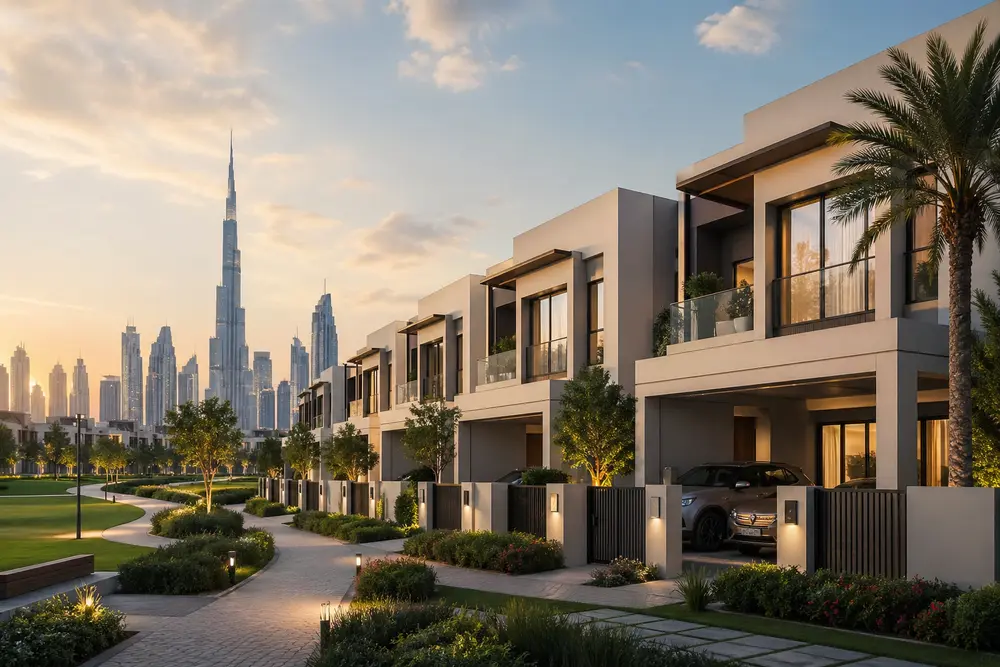
Dubai's luxury property market has outperformed all other global luxury real estate markets since 2021, with ultra-prime prices increasing 100-300% in some communities. This comprehensive guide analyses what's driving the luxury surge, which properties are rising fastest and the outlook for the segment.
Dubai's Luxury Market: A Global Anomaly
In a global luxury real estate market that has shown mixed performance since 2022 — with London, New York and Hong Kong experiencing price softening in the ultra-prime segment — Dubai has continued to defy gravity. The emirate added more billionaires to its population in 2023 than any other city globally, and this wealth concentration has manifested directly in extraordinary luxury real estate transaction volumes and values.
The Knight Frank Wealth Report consistently ranks Dubai among the top 3 global cities for ultra-high-net-worth individual (UHNW) property demand, alongside London and New York. But unlike those markets, Dubai charges no stamp duty surcharges for foreign luxury buyers and applies zero capital gains tax — making its after-tax return profile uniquely compelling for global wealth deployers.
Key Luxury Segments and Price Points
Palm Jumeirah Villas (AED 15-150M+)
The most iconic luxury segment in the UAE — frond villas with private beach access. Price appreciation: 200-300% since 2020. The renovation of older Palm villas (converting 2006-era construction to contemporary specification) has been one of Dubai's most active luxury renovation markets, with builders quoting 18-24 month waits for quality renovation teams.
Emaar Beachfront Penthouses (AED 10-40M)
The top floors of Emaar Beachfront towers — particularly Address The Bay and Beach Vista — offer penthouse products with private pools, beach frontage and 270-degree sea views that compete with global luxury equivalents at 30-50% of equivalent Monaco or Cannes pricing.
DIFC and Downtown Ultra-Premium (AED 5-50M)
Armani Residences, One at Palm Jumeirah, The Opus Residences and forthcoming Vela Dorchester — architectural landmark products that represent the pinnacle of Dubai's branded luxury segment.
Mohammed Bin Rashid City Mansions (AED 20-80M)
District One's Crystal Lagoon mega-villas represent a growing luxury segment — inland waterfront living for families who want the lagoon lifestyle at UAE price levels that would buy a small house in Monaco.
Who Is Buying Dubai Luxury?
- Russians and CIS nationals: Post-2022 sanctions created significant offshore capital seeking UAE real estate, particularly in the luxury segment
- Indians (HNWIs and UHNWIs): India's growing billionaire class — particularly tech founders, real estate magnates and commodities traders — are major Palm Jumeirah and Emaar Beachfront buyers
- British and European buyers: Tax-driven relocation seeking Capital Gains Tax exemption on substantial wealth realisation
- Middle Eastern royals and family offices: GCC sovereign and UHNW capital seeking UAE diversification
- Chinese UHNW: Growing presence despite historical travel restrictions — now increasingly active in AED 10M+ segment
Luxury Market Outlook 2026-2030
Dubai's luxury property market continues to grow its international buyer pool — each geopolitical disruption globally (sanctions, capital controls, tax increases in other jurisdictions) tends to redirect wealth flows towards Dubai. The UAE's political stability, zero luxury taxes and rapidly improving lifestyle infrastructure (Michelin-starred restaurants, luxury retail, international education) are structural advantages that are difficult for other markets to replicate. Luxury market outlook: continued outperformance through 2030, particularly for supply-constrained waterfront and branded residences.